
After three years away from racing due to various reasons like the COVID-19 pandemic, family commitments, and work responsibilities, I made the decision to take on the ultimate challenge of a full-distance triathlon. With great anticipation, I registered for Challenge Roth 2023, widely regarded as one of the most prestigious and popular triathlon events in Europe, if not the world. The scale of this event was mind-boggling, with over 3500 athletes participating, 7500 volunteers generously supporting the race, and an astonishing 250,000 enthusiastic spectators lining the streets of Roth, a town located north of Munich. Challenge Roth was a one-of-a-kind experience for both the participants and the community, turning the entire area into a weekend filled with excitement and energy.
Committing to this race meant dedicating around six months of focused and intense training. Starting with around 10 hours per week, I gradually increased my training load to a peak of 17 hours per week before tapering down. Balancing training with the demands of family, work, and maintaining a social life was not easy. However, I owe a tremendous amount of gratitude to my wife, who provided unwavering support throughout the entire process, allowing me the time and space to pursue this ambitious goal.
During the training period, unforeseen challenges emerged. My son broke his leg halfway through my training, which forced me to pause for 10 days. At that point, I contemplated postponing the race until the following year. However, my wife stepped in with her continuous encouragement and convinced me not to let go of the hard work I had already invested. With a few modifications to my schedule, I managed to continue training.
In addition to personal challenges, business trips posed an additional obstacle. Spending two weeks each month traveling for work to places like Baghdad and Riyadh, where access to pools and cycling routes was limited, required adaptability. Nonetheless, I found ways to focus on strength training and treadmill running during these trips.
Despite the hurdles, I remained dedicated to my long brick sessions, completing almost all of them throughout the six months of training. These sessions, often done indoors on a home trainer and treadmill, served as opportunities to discover my mental and physical strength as I approached each session with the mindset of learning more about my physical, mental, and physiological capabilities.
While indoor training provided numerous physical and mental benefits, I acknowledged the value of outdoor cycling and the unique irreplaceable benefits, such as bike handling skills and environmental awareness challenges it brings. Nevertheless, I made the most out of the indoor training and prepared extensively for the bike leg of Challenge Roth by riding the course on Rouvy multiple times. This allowed me to familiarize myself with the course’s elevation profile, mentally preparing me for the demanding stretches that lay ahead. The 5-6 hours spent cycling on the home trainer each session significantly enhanced my mental capacity.
Before delving into the race week itself, I learned a valuable lesson during my training journey: preparing for a full-distance triathlon entails more than simply logging swim, bike, and run hours. While these disciplines form the foundation of the sport, other elements such as strength training, nutrition, hydration, and recovery play equally crucial roles in achieving success. Recognizing the significance of these factors, I dedicated myself to two weekly strength sessions and utilized my long brick sessions to experiment with different nutrition and hydration strategies. These efforts aimed to determine the optimal intake of carbohydrates and electrolytes per hour, without causing GI distress or energy depletion.
Knowing my nature of committing to any objective, I approached this full-distance triathlon with a sense of determination. The race week finally arrived, and as I traveled to Roth, I could feel the energy building up around me. The atmosphere in the town was amazing, with athletes from all over the world buzzing with anticipation and nerves of being in the HOME OF TRIATHLON!!
RACE DAY
Breakfast – 3:30AM
Race day dawned, and I woke up before sunrise to ensure I had plenty of time for my pre-race rituals. The weather was ideal, with clear skies and moderate temperatures, setting the stage for a memorable day of racing. My ritual breakfast on race day is 2 peanut butter honey toast, 2 bananas and sip on 1 liter with 1500 mg of electrolytes.
As I was getting ready, I found myself contemplating between my one-piece trisuit or opt for the two-piece trisuit. I also pondered whether to wear contact lenses and sunglasses or rely on my prescription glasses. Remembering the golden rule “DO NOT TRY ANYTHING NEW ON RACE DAY” I chose to stick with my two-piece trisuit and my reliable prescription glasses.
I had a final check of my gear and bags and I drove my way to the swim start.
PreSwim – 5:00AM
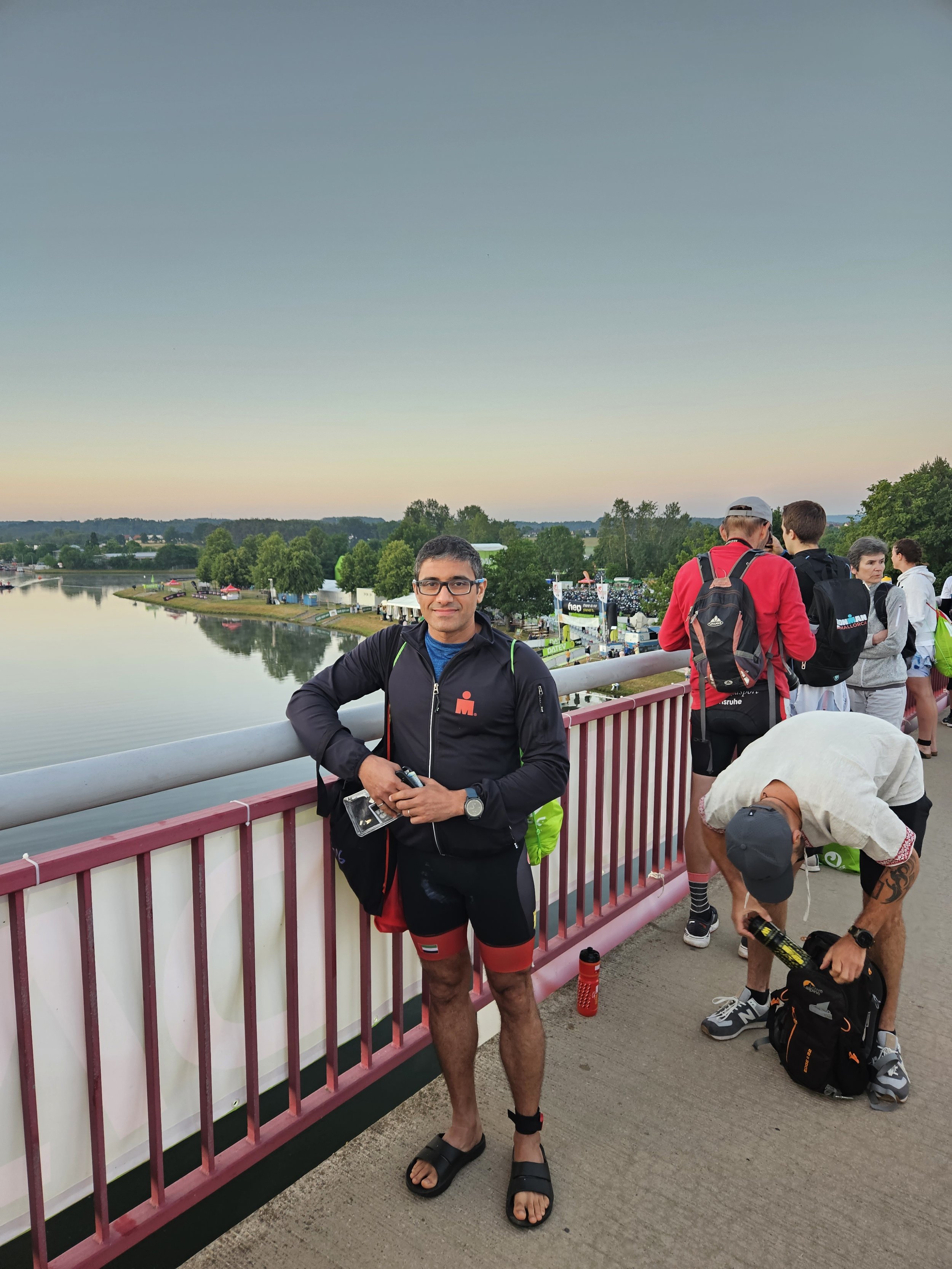
After parking my car, I walked to Transition 1, loaded my nutrition and hydration on the bike, checked my helmet, pumped the tires and attached my bib number. I then dropped off my bike bag and finish bag in their designated areas before putting on my wetsuit and awaiting the start of the swim.
The pro athletes began their swim at 6:30 AM, and it was impressive to witness their swift and aggressive start, with some pushing and shoving in the initial 100 meters. Observing the pro men and women in transition 1 was impressive! They were fast!
My own swim start time was scheduled for 8:00 AM, which meant I had to wait for about 1.5 hours, leading to some anxiety. However, I managed to stay calm and engage in small talk with fellow athletes, reminding myself that self-control would be crucial for a successful race, considering the long day ahead.
Swim – 8:00 AM
As the gun went off, I turn on my Garmin and off I am to start one of the most challenging experiences of my life! The swim leg took place in the Main-Danube Canal, a picturesque setting that added to the allure of the race. Despite the chaos and jostling in the water, I focused on finding my rhythm and maintaining a steady pace. I was able to take over some of the slow athletes that went into the water in batches before me, but stayed in control.
The support from the crowd along the canal visible while taking a breath after each stroke, served as motivation throughout the swim. I exited the water feeling strong and ready to tackle the next leg.
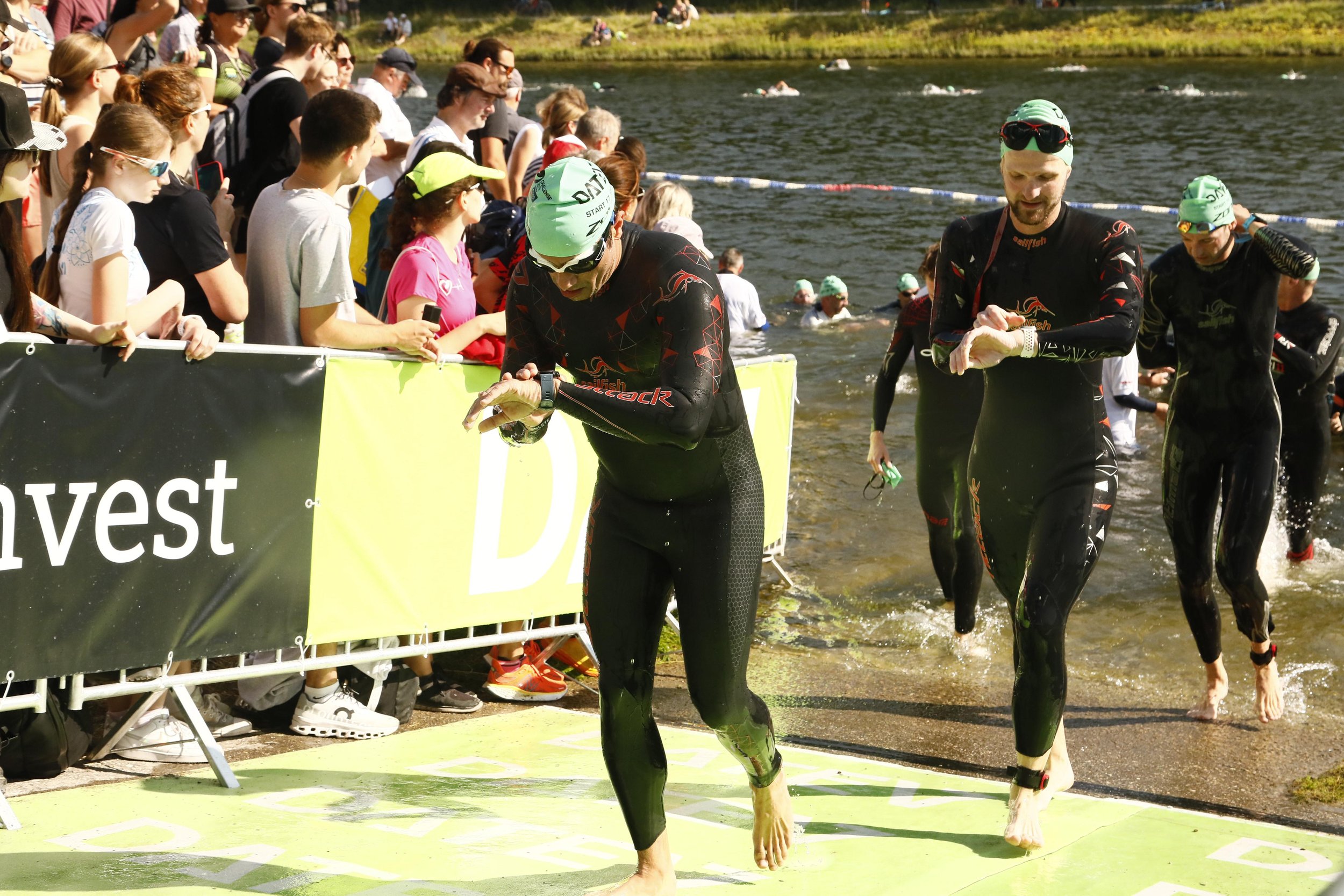
Like any triathlon race, I always have a time in mind for each discipline. I was expecting my time for the 3800m swim, to be between 1hr10min and 1hr20 min, which would be a pace between the 1min50sec and 2min05sec. I finished the swim in 1hr 13min, which I was very happy with especially that I didn’t cramp and that my breathing felt in control throughout. It felt that my swim was fully aerobic.
Bike:
With around 8 mins in transition 1, I quickly changed into my gear and off I was on my bike. The 180-kilometer course took us through the scenic Bavarian countryside, with rolling and steep hills but stunning landscapes. It took me around 45km to settle into a comfortable pace, with the objective of conserving energy for the second bike loop and the marathon coming later.
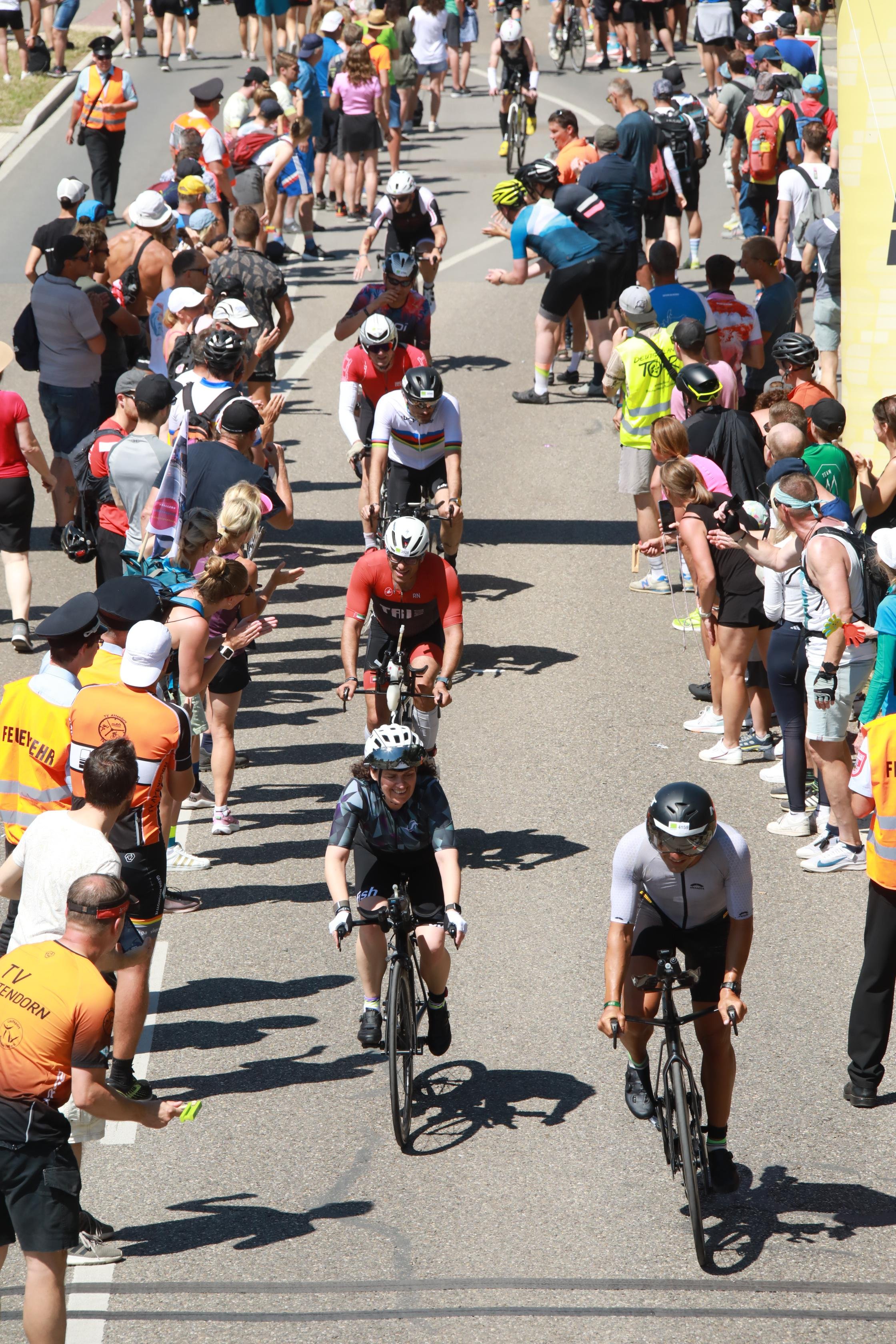
Despite not knowing anyone among the spectators, I was amazed by the encouragement I felt as I was riding up the challenging uphill sections, particularly the first ascent of Solar Hill. The sight of people lining up, creating a narrow path that allowed only one bike to pass at a time, created an indescribable and incredible sensation. It was a unique feeling!!

Overall, the bike leg presented its fair share of challenges, with some tough climbs and technical descents. However, the training I had done, indoors on Rouvy’s Challenge Roth course, paid off.
I had ridden the course multiple times on Rouvy maintaining an average speed of 30 km/hr for the entire course. By applying the same power during the race, I expected to complete the bike leg in 6 hours. Ultimately, I finished the bike portion in 6 hours and 9 minutes due to my slow approach on the real downhill sections, as I lacked the skills and confidence to reach the high speeds I achieved in the virtual simulation. Engaging in bike course simulations helped me understand my abilities on the course, preventing me from pushing too hard to chase a specific time and end-up compromising my overall performance. I highly recommend athletes to incorporate at least 2 bike course simulations into training.
Apart from the actual cycling, I focused on four main aspects during the bike: nutrition, hydration, heart rate (HR), and power. To ensure I had enough energy for the run, I had to nail my nutrition and hydration plan. My nutrition included three bottles of carb drinks, each containing a combination of UCAN powder and 320 Maurten sachets, a Maurten energy bar, a Precision Hydration gel pack, Maurten caffeine gels, and bananas from aid stations. In total, I consumed around 660g of carbs for the bike leg, providing an average of 100g of carbs per hour.
For hydration, I used Precision Hydration electrolyte products. Each bottle contained 1500mg of Precision Hydration, and I also took 1000mg of Precision Hydration capsules. Additionally, I picked up water bottles from aid stations to stay hydrated and cool off during the race.
Regarding power, I aimed to maintain 75% of my functional threshold power (FTP) during training, but found it challenging to achieve the same power output outdoors. With my coach, we decided to ride the bike course at 70% of my FTP. In the end, I completed the race at 71% of FTP, which was aligned well with the target.
Monitoring my heart rate, I spent around 2 hours and 40 minutes in zones 1 and 2, with the second bike loop in zone 3. Although I was initially concerned about entering the run with my HR in zone 3, I didn’t feel tired or fatigued. In fact, I felt good and ready to transition to the run leg.
Overall, my focus on nutrition, hydration, HR, and power during the bike leg contributed to my performance and helped me maintain my energy levels for the marathon.
The run:
With approximately 4 minutes spent in Transition 2 to change into my running gear, including the nutrition belt, carb bottle, visor, and running shoes, I set off to conquer the marathon as running is my favorite discipline.
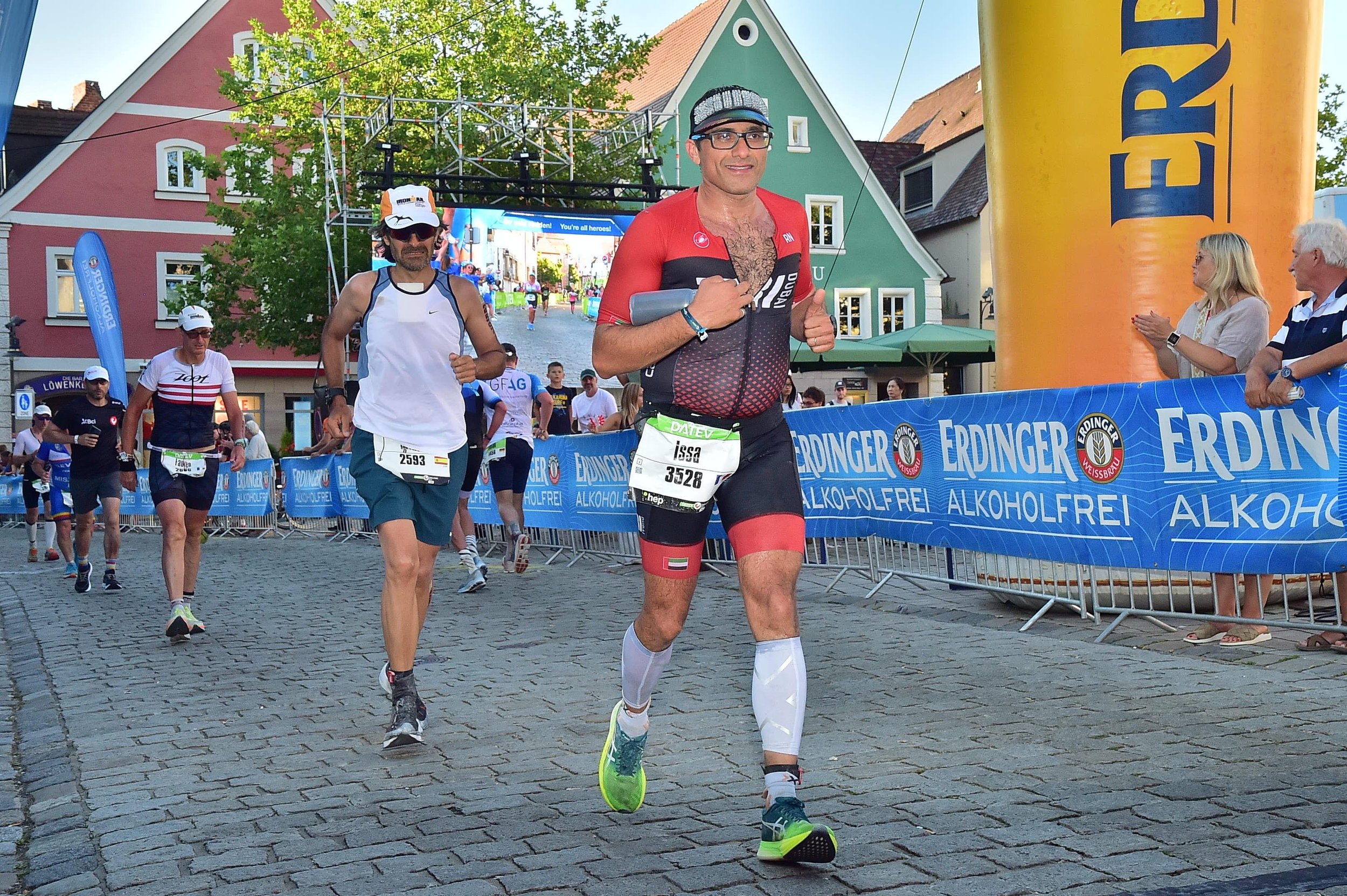
I knew that the run would be the true mental test of endurance but the cheers and support from the spectators and volunteers provided a constant source of motivation.
The aim was to maintain a steady pace of 6min/km, fueling myself with the nutrition and hydration strategies I had practiced during training. However, fueled by adrenaline and jelly legs, I found myself running at a faster pace of 5:40/km for the first km. At this point, my heart rate reached 163 bpm. Recognizing pushing too hard early would jeopardize the second half of the marathon, I slowed down and returned to my target pace of 6 min/km.
Despite the challenging start along the never-ending hot canal, I enjoyed it especially due to the gentle impact of the gravel surface on my joints and how the athletes were running so close to each other. As I finished the canal and back to Roth, fatigue began to set in at the 30km mark. Despite this, I maintained a running pace, slower, averaging around 6:30min/km but my HR was hitting zone 4, halfway into the run but kept feeling in control.
Reaching the 34-kilometer mark, I felt a sense of familiarity as I ran with a few friends the last 8 kilometers of the marathon course a few days before the race. Knowing the last upcoming challenging hill helped me mentally for the demanding final stretch of the marathon.
The pivotal moment came at the 36-kilometer mark, situated at the highest point of the run, near the North Roth pond. With around 6 kilometers remaining, I was confident that I would complete the full distance triathlon. Recognizing the accumulated fatigue and pain, I decided a run-walk strategy to ensure forward progress while aiming to maintain a running pace rather than a walking pace.
As I made my way towards the last few kms of the run, the atmosphere grew even more electrifying. The crowd’s cheers were deafening, and the sight of the iconic Challenge Roth stadium and finish line was indescribable. With a surge of adrenaline, I picked up the pace, till the finish line.
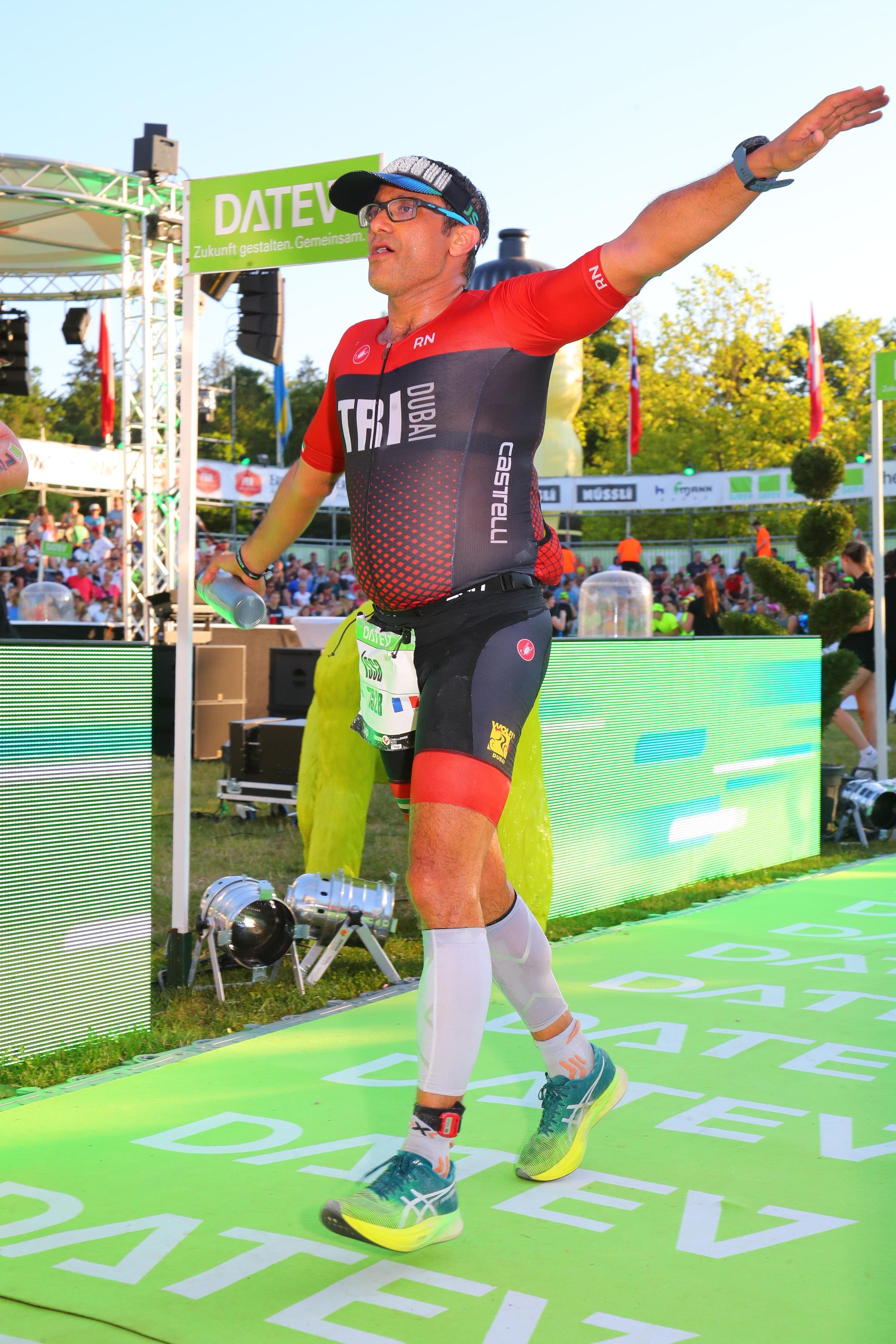
Crossing the finish line was a moment of self-achievement and relief, greeted with a finisher medal and the overwhelming sense of accomplishment.
I was able to accomplish the race at the best of my capabilities as I replicated my training numbers; my swimming pace for my last long swim during training (the 10x400m) was 1min53sec, which was exactly what I averaged during my swim on race day. My average pace on Rouvy’s Challenge Roth course, was 30km/hr while I averaged 29.5 km/hr on race day and my average pace on my longest run off the bike was 6:08min/km while I averaged 6:26min/km on the marathon on race day.
Reflecting on my experience at Challenge Roth, I realized that the journey was just as important as the destination. The countless hours of training, the setbacks, and the moments of doubt all shaped me into a stronger and more resilient athlete. The training and the race taught me the power of perseverance, determination, and the incredible support that exists within the triathlon community.
Challenge Roth will hold a special place in my triathlon life. It is the first race that pushed my limits and allowed me to discover new depths of strength and endurance within myself.

Lastly, I would like to thank to my triathlon coach, Jan Gremmen and the Flying Dutchman Team. Over the course of the past six years, Jan has been instrumental in my triathlon journey, guiding me from sprint distance races to conquering the full distance triathlon. Throughout our training, Jan’s priority has always been to push my limits while ensuring an injury-free journey and enjoyment. I am incredibly grateful for his continuous support and expertise.
I would also like to extend a huge thanks to my swimming coach, Rory Buck. Through his dedicated and individualized coaching, Rory has played a significant role in transforming my swimming ability. Under his guidance, I have seen remarkable improvements, going from a a TSS 2:15min/100m to a 1:46min/100m His expertise and commitment have been invaluable to my progress.
Furthermore, I want to acknowledge and thank my personal trainer, Nenad Kovacevic. Nenad has worked closely with me to enhance my strength and performance across the swim, bike, and run disciplines. His tailored training programs and guidance have played a crucial role in my overall development as a triathlete.
I am incredibly fortunate to have had the support and expertise of these remarkable individuals on my journey, and I am truly grateful for their contributions to my achievement!
Last but not least, I would like to thank my family, parents, sisters, kids and friends who anxiously followed my full distance triathlon race for 12 hours 02 Minutes and 22 seconds.
I can only end this post-race report, by thanking my wife Basma, who has been by my side throughout the past 6 years, enduring waking up numerous mornings without me by her side, the going to bed early night, the long workouts on weekends, the spaced-out fatigued body and mind after the brick sessions, the continuous talks on HR, Watt, TSS, etc… None of that would have been slightly possible if it wasn’t for her. I dedicate this race report to my “Iron Woman”. Thank you Bassoum!
More in this video https://youtu.be/V-zy4m8WHkQ
June 25th, 2023
Issa Azar
 TriDubai
Leave a comment